

California’s three strikes law can increase punishment when a person has certain prior convictions. But prosecutors still have to prove the current charge, and they have to establish the prior convictions properly. Both steps have rules, and both give a defense lawyer something to examine.
If you are facing felony allegations, speaking with a California criminal defense lawyer early can help you understand the evidence and possible defenses. Liberty Criminal Defense & DUI works with people in exactly that position. Evan Vargas is a criminal defense attorney who represents clients facing criminal and DUI allegations in California. At Liberty Criminal Defense & DUI, Evan Vargas can review the facts, your prior record, the evidence, and the defenses that may fit your situation.
In this article, we provide you with general information, not legal advice for your case. We walk you through how strike allegations work, what details matter, and what you can do right now.
What Is California’s Three Strikes Law?
The three strikes law is not a criminal charge. Nobody gets arrested for “three strikes.” It works as a set of sentencing rules, found mainly in Penal Code section 667 and section 1170.12. They apply after a person is convicted of a new felony and has qualifying prior convictions.
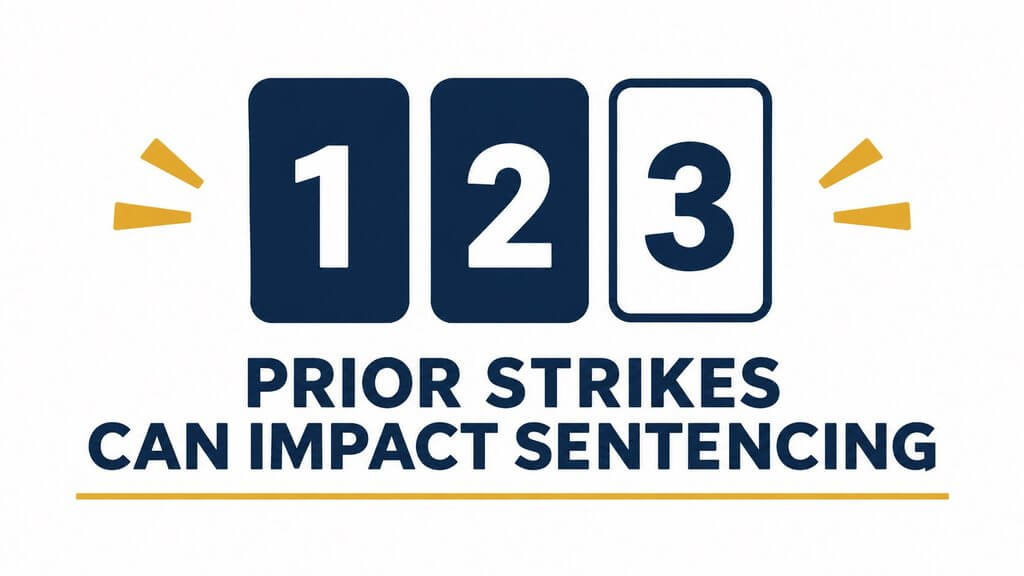
Here is how it works in practical terms:
- No prior strikes: The sentencing rules generally do not apply.
- One prior strike: A new felony conviction can lead to a doubled sentence. People call this a second strike.
- Two or more prior strikes: If the new conviction is also a serious or violent felony, the sentence can reach 25 years to life. People call this a third strike.
That last point changed in 2012. Voters passed Proposition 36, the Three Strikes Reform Act, and the 25-years-to-life term now generally requires the current offense to be a serious or violent felony, with a few narrow exceptions. A person with two priors who faces a non-serious, non-violent felony may face the doubled-term rules instead.
Two proof requirements are the basis of this. The prosecution must prove the current offense beyond a reasonable doubt. It must also properly allege and prove the prior convictions, or the defendant must admit them. The San Diego County Public Defender’s strike summary covers this structure in plain terms.
Keep in mind: A strike allegation is a claim prosecutors make. It does not become a court finding until someone proves it or the defendant admits it.
Liberty Criminal Defense & DUI starts with those two questions:
- What can the prosecution actually prove about the new case?
- And what can it actually prove about the old one?
Which Convictions Can Count as Strikes?
Not every felony is a strike. A strike generally means a conviction for a felony on one of two statutory lists: violent felonies under Penal Code section 667.5(c) and serious felonies under section 1192.7(c). Many drug offenses and many theft offenses fall outside both lists.
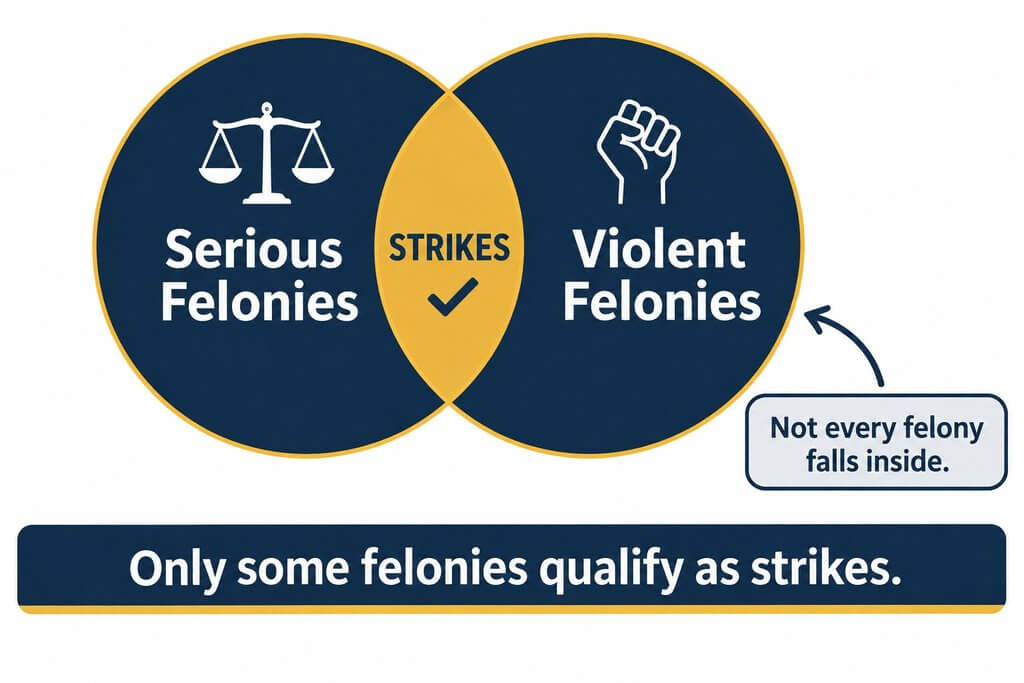
Age usually does not erase a strike. In People v. Superior Court (Romero), the California Supreme Court explained that qualifying prior felonies count regardless of how old they are. Out-of-state convictions can also count when their elements match a California strike offense, which is a detail worth checking closely.
Examples of Allegations That May Require Closer Review
| Type of Allegation | Why it May Matter | Important Caution |
| Assault with a deadly weapon | The alleged weapon, injury, and intent can affect the charge and sentence | Not every assault allegation is automatically a strike |
| Robbery | Often treated as a serious/violent offense, but the prosecution must prove the elements | The facts and evidence still matter |
| Residential burglary | The location and circumstances can matter | The prosecution must prove the required elements |
| Domestic violence felony | The relationship, injury, prior convictions, and protective orders may matter | Each case turns on its own facts |
| Weapons allegations | The type of weapon and alleged use can affect exposure | A weapon allegation does not automatically prove a strike |
| DUI with alleged injury | Injury allegations can raise the stakes, but DUI is not automatically a strike | The charging documents and evidence need review |
Assault Shows Why the Details Matter
A simple assault or battery is usually a misdemeanor and is not a strike. An aggravated assault allegation, such as assault with a deadly weapon, carries a more serious charge. Some aggravated assault convictions qualify as serious felonies, and others may not, depending on the statute, the facts the prosecution proves, and any weapon or injury findings. The word “assault” tells you very little on its own.
The Label Prosecutors Use is Also Not a Final Court Determination
A complaint can list a strike allegation, and a police report can describe an incident in the harshest terms, but a judge or jury still decides what the evidence supports. Liberty Criminal Defense & DUI can review the complaint, the prior record, and the evidence to see whether a strike allegation actually applies. Evan Vargas can compare the statute, the conviction documents, and the facts side by side, because an error in any one of them can change your exposure.
How Prior Convictions Affect a New Case
Four terms get mixed together, so let’s separate them.
- A current charge is the new accusation you are fighting now.
- A prior conviction is an older case that ended in a guilty verdict, a guilty plea, or a no-contest plea.
- A strike allegation is the prosecutor’s claim that a prior conviction qualifies under the sentencing rules.
- A sentencing enhancement adds time to a sentence when the prosecution proves certain facts or priors.
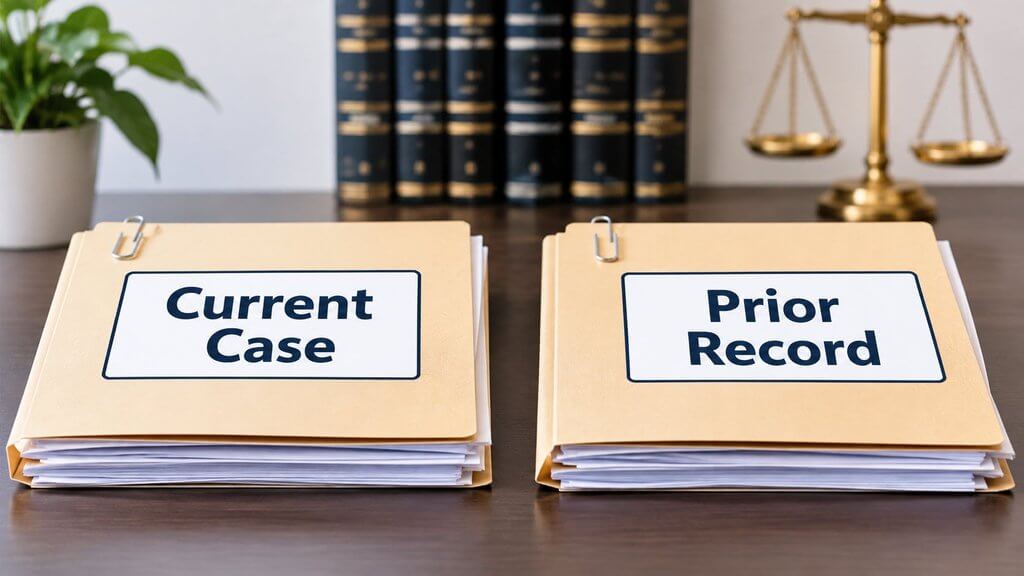
Current Charge Versus Prior Strike Allegation
| Issue | Current Charge | Prior Strike Allegation |
| What prosecutors must prove | The elements of the new offense | The validity and qualifying nature of the alleged prior conviction |
| Main risk | Conviction on the new case | Increased punishment if the strike is proven or admitted |
| Possible defense focus | Identity, intent, self-defense, evidence, witnesses, procedure | Accuracy of records, legal validity, constitutional issues, whether the prior qualifies |
| Why timing matters | Evidence and witnesses can disappear | A prompt review may identify issues before important decisions are made |
Do not assume an old conviction automatically counts as a strike. Someone might tell a lawyer, “I have a strike from 2009,” and sometimes that is right. Other times the conviction involved a different statute than the person remembers, or the court file tells a different story. The statute, the court records, the age of the conviction, and the way the court handled it can all matter. How the three strikes law applies to you depends on those records, not on memory.
How Alleged Injuries Change the Case
An alleged injury can shape both the charge and the prosecution’s theory. A minor injury may support one theory. A serious injury may support a more serious allegation.
Start with the difference between force and great bodily injury. An allegation of force says someone used physical force against another person. An allegation of great bodily injury says the harm was significant or substantial, more than minor or moderate. That distinction can affect the charging decision, the sentencing exposure, and the available defenses.
The details of the injury matter too:
- Medical records show what treatment the person received and when.
- Photographs show what the injury looked like and when someone took the picture.
- Witness statements may match the injury or conflict with it.
- Timing can matter a great deal. An injury documented days later may raise different questions than one documented at the scene.
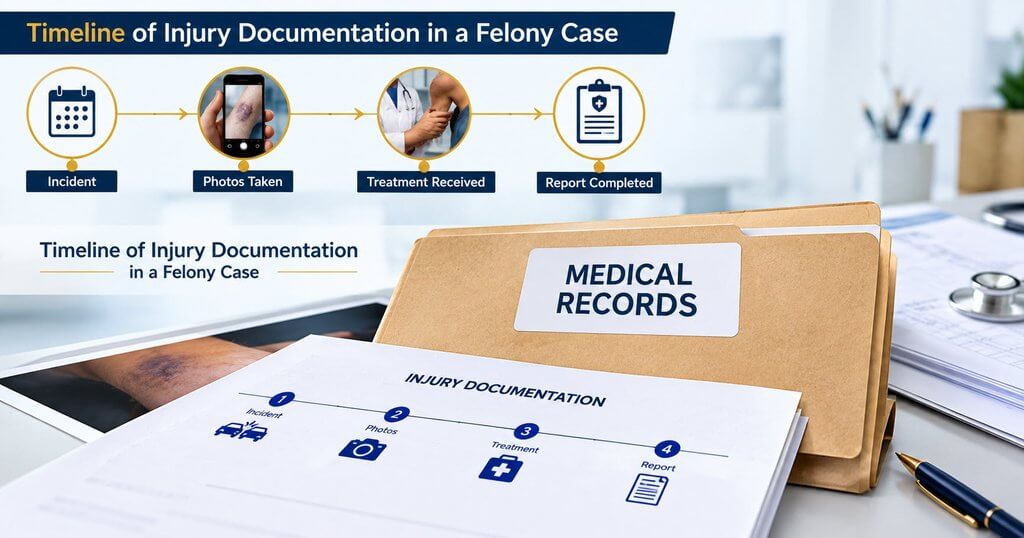
The prosecution also has to connect the injury to the accused person’s conduct. Someone may have fallen, someone else may have been involved, or the injury may predate the incident. And even a real, serious injury does not prove what the accused person intended.
Important point: An alleged injury is evidence. It is not, by itself, proof of intent, identity, or every element the prosecution must prove.
Liberty Criminal Defense & DUI pays close attention to the timeline:
- when the injury happened,
- who saw it,
- when someone photographed it, and
- when the person sought treatment.
Evan Vargas can compare those records against witness accounts and look for alternative explanations, inconsistent stories, and gaps in the evidence.
Weapons, Intent, and Self-Defense
A weapon allegation can change a case quickly. But the prosecution still has to prove the facts behind it.
Owning or holding an object is different from using it as a weapon. A kitchen knife in a drawer is not a weapon used in an assault. A bottle on a table is not either. The questions that matter include what the object was, whether anyone actually used it, how it was used, and what the injuries, witness accounts, and forensic evidence show.
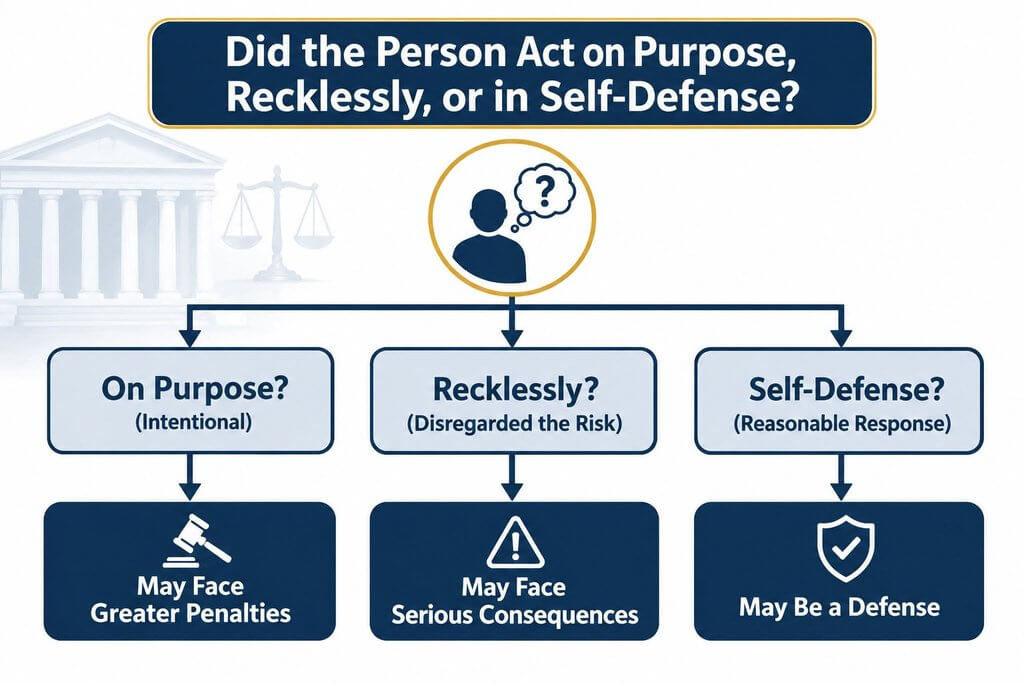
Intent matters just as much. Did the person act on purpose? Did the person act recklessly? Or did the person act in self-defense? Each answer points to a different legal theory, and each one can change the charge and the exposure.
Self-defense may apply when a person reasonably believed force was necessary to prevent imminent harm and used only the force that seemed reasonably necessary. Once the evidence raises self-defense, the prosecution generally has to disprove it beyond a reasonable doubt. Whether it fits depends on the facts, and an attorney can evaluate them.
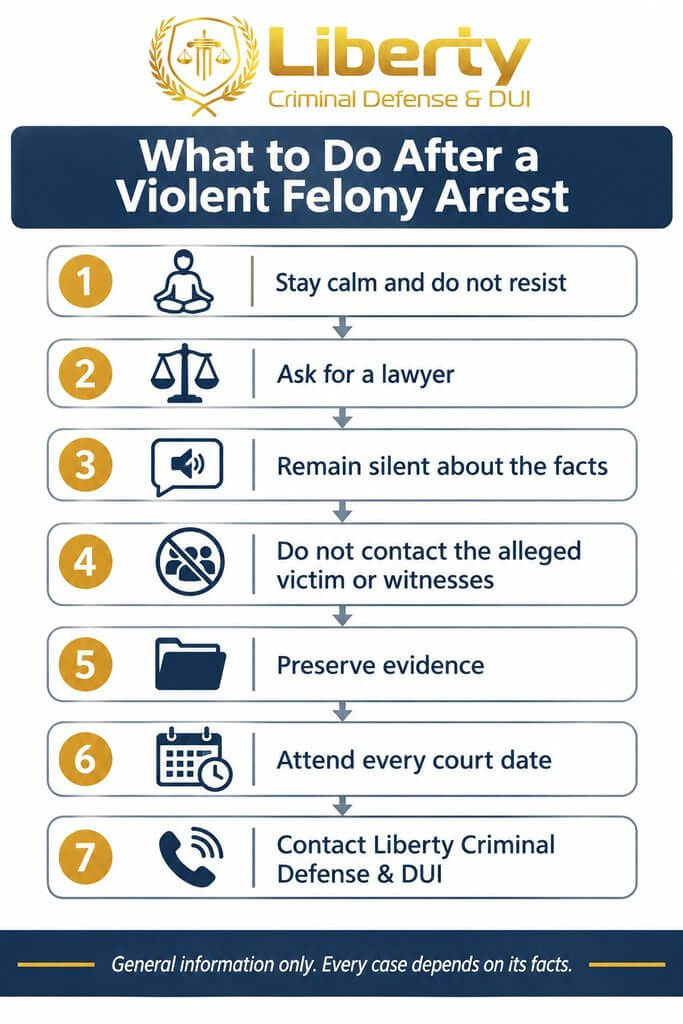
What you say at the scene matters too. Officers often ask casual questions before a formal interview, and those statements can come back at trial. That is one reason to be careful about talking to police without counsel. Evan Vargas can review whether officers recorded the statements, how they asked their questions, and whether the statements should carry weight.
What to preserve after an arrest:
- Write down what you remember while it is fresh.
- Save texts, photos, videos, and location information.
- Identify witnesses and their contact information.
- Do not contact the alleged victim or witnesses about the case.
- Do not post about the incident on social media.
- Do not discuss the case with jailmates, family members, or friends in detail.
- Ask for an attorney before answering questions.
Why the Alleged Victim’s Identity Matters
This section is not about blaming victims. It is about making sure the prosecution proves the actual facts and follows the law.

Who the alleged victim is can affect the charges, potential enhancements, and the defenses available:
- Police officers, firefighters, and other protected public servants. An alleged assault on a peace officer or firefighter can involve different legal issues and may raise the seriousness of the charge. Because some of these offenses can qualify as serious felonies, the three strikes law may come into play if you have a prior.
- Domestic partners. Domestic violence cases often involve relationship evidence, prior incidents, and protective orders. Those pieces can help or hurt, and each one needs a careful look.
- Children and vulnerable adults. These allegations can carry additional legal complications and different investigative steps.
In every one of these situations, the alleged victim’s account is evidence. A judge or jury must test that evidence, not accept it automatically. Testing it means checking for consistency, corroboration, motive, and what the physical evidence actually shows.
Your Rights After an Arrest
Know these seven points before anyone asks you a question:
- You have the right to remain silent.
- You have the right to ask for a lawyer.
- You should not explain your side of the case to police without counsel.
- You should not consent to searches without understanding your rights, though the facts may affect what police can do.
- You should ask what you are being detained or arrested for.
- You should not lie, argue, or physically resist.
- You should contact a criminal defense attorney as soon as possible.
Remaining silent is not an admission of guilt. It is a constitutional protection, and a person who uses it is not hiding anything. You also keep the right to challenge the evidence against you, including how police collected it. Liberty Criminal Defense & DUI can advise a client on what to do before an interview, an arraignment, or a bail hearing.
How a Defense Attorney Can Challenge a Strike Allegation
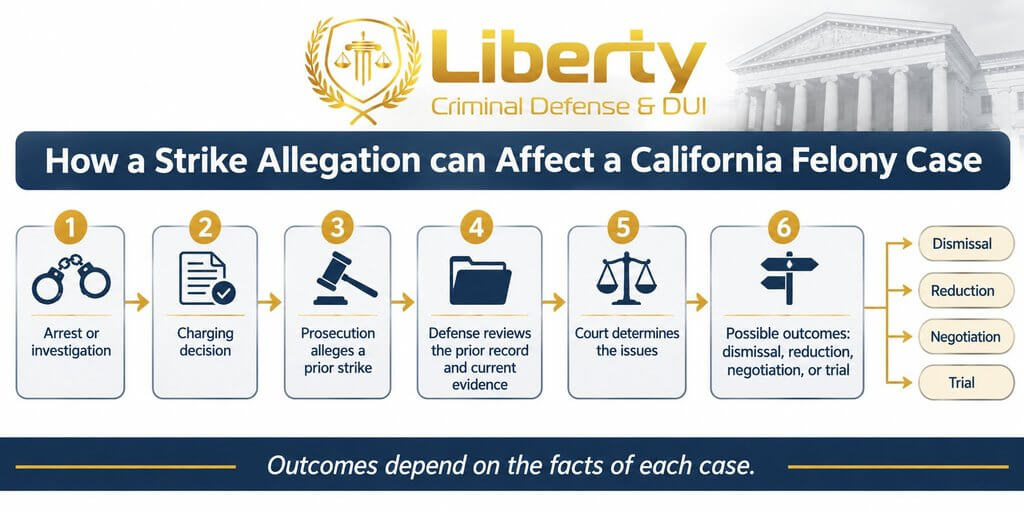
A strike allegation gives a defense lawyer two cases to examine: the new one and the old one. A careful review may include:
- The current police report and charging documents.
- Body-camera, surveillance, phone, and social-media evidence.
- Witness statements and any inconsistencies.
- Medical records and expert evidence.
- Forensic evidence, such as DNA, fingerprints, ballistics, or digital data, where relevant.
- The validity and documentation of each alleged prior conviction.
- Whether the prior conviction legally qualifies as a strike.
- Whether dismissal, reduction, negotiation, or trial makes sense under the facts.
The three strikes law also gives courts some room in certain situations. Under People v. Superior Court (Romero) and Penal Code section 1385, a judge may have discretion to dismiss a prior strike allegation in the interest of justice. Whether a judge will do that depends heavily on the facts, the person’s record, and the nature of the current offense. It is not automatic, and no lawyer can promise it.
Liberty Criminal Defense & DUI approaches each case by asking what the evidence really shows and which options fit. Evan Vargas can walk you through what he sees in the paperwork and discuss whether the facts point toward investigation, negotiation, motion practice, or trial. Evan Vargas can also tell you what he does not yet know, which is just as important early on.
Common Mistakes to Avoid
Mistakes That Can Hurt a Felony Case
| Mistake | Why it can hurt | Better approach |
| Talking to police without a lawyer | Statements can be used against you | Ask for an attorney and remain silent |
| Contacting the alleged victim | This can create new allegations or violate a court order | Let your lawyer handle communication |
| Posting about the case online | Posts can be used as evidence | Do not discuss the case publicly |
| Ignoring court dates | Missing court can lead to a warrant or worse outcome | Track every hearing and follow counsel’s advice |
| Assuming a prior conviction is a strike | The legal status of a prior conviction may be disputed | Have the record reviewed promptly |
| Waiting to hire counsel | Early decisions can affect evidence and strategy | Contact a defense lawyer quickly |
Most of these mistakes come from stress, not bad intent. People want to explain, apologize, or fix things. That instinct is human, but in a felony case it can hurt you. Liberty Criminal Defense & DUI helps clients channel it into steps that protect their position.
Frequently Asked Questions
Does every felony count as a strike under California’s three strikes law?
No. A strike generally requires a prior conviction for a serious or violent felony listed in California statutes. Many drug and theft offenses do not qualify. Evan Vargas can review the specific conviction and statute.
Can a prior conviction be removed from consideration as a strike?
Sometimes. A lawyer may show the record is inaccurate or the conviction does not qualify under the three strikes law. A judge may also dismiss a strike under People v. Romero in some cases. Results depend on the facts.
What should I do if police want to question me about a violent felony?
Stay calm, say you want to remain silent, and ask for a lawyer. Do not explain your side or try to talk your way out. Then call Liberty Criminal Defense & DUI before any interview.
Can self-defense help in an assault case?
It can. If you reasonably believed force was necessary to prevent imminent harm, and you used only reasonable force, self-defense may apply. The prosecution must disprove it beyond a reasonable doubt, so facts and witnesses matter.
Does a DUI conviction count as a strike?
A DUI is not automatically a strike. Whether a DUI case involves a qualifying serious or violent felony depends on the charge and allegations. Evan Vargas can review the records and explain how the three strikes law may apply.
When should I contact a California criminal defense attorney?
As soon as possible, ideally before you speak with police or attend an interview. Early contact helps preserve evidence, protect your rights, and review any prior record. Liberty Criminal Defense & DUI can discuss your situation.
Talk With Evan Vargas About Where Your Case Actually Stands
A strike allegation does not mean your case is already decided. Prosecutors still have work to do, and a careful review of the arrest, the evidence, and your prior record can show where the real issues sit.
If you are facing a violent felony allegation in California, the sooner you understand your options, the better prepared you can be. Contact Liberty Criminal Defense & DUI to speak with Evan Vargas about the arrest, your prior record, the evidence, and the defenses that may be available. Evan Vargas can explain how the three strikes law may or may not affect your situation, and what to do next.