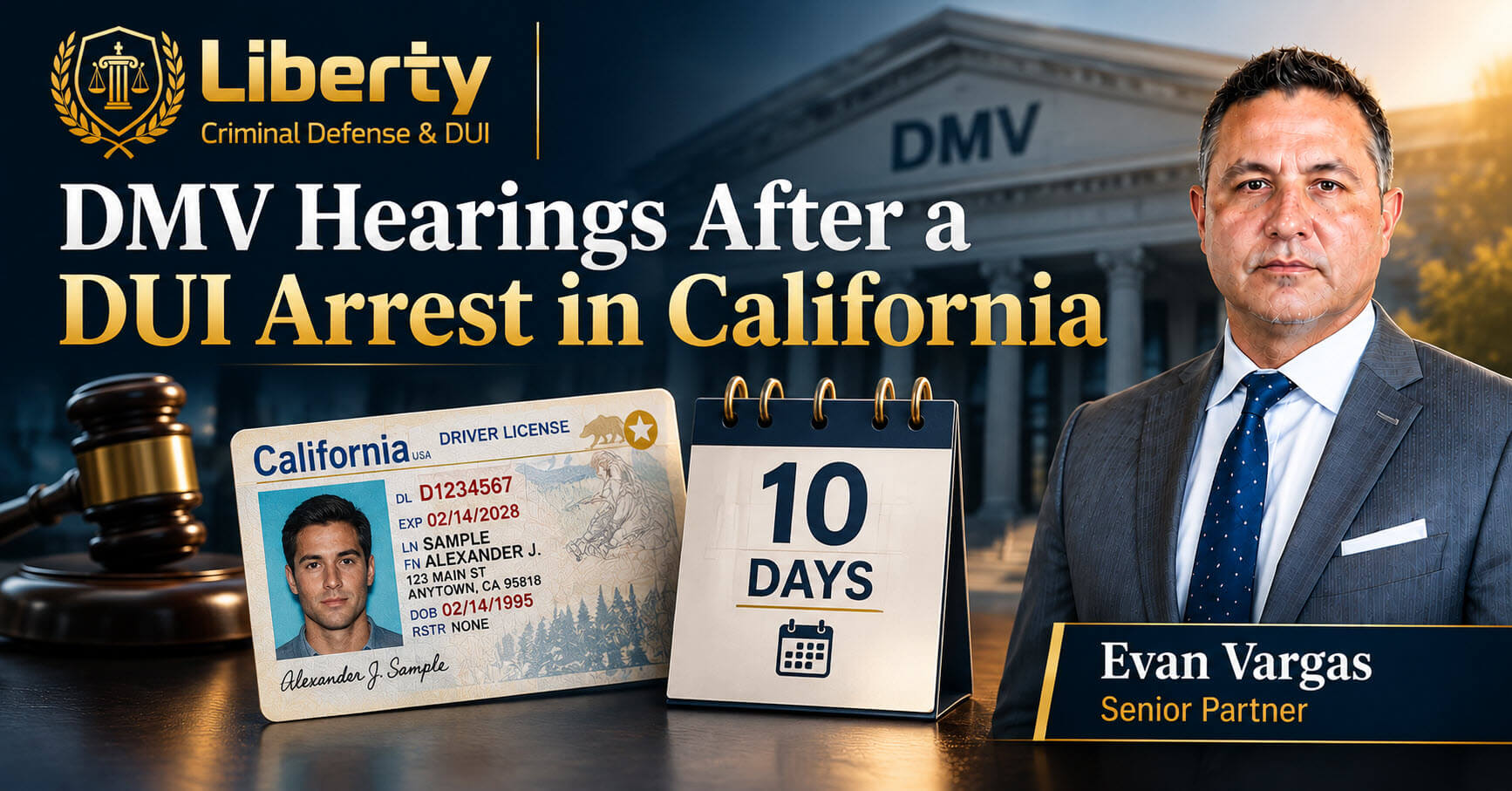
The moment a California DUI arrest ends, you’re handed a pink piece of paper and told it’s your temporary license. That slip is good for 30 days, and most drivers assume the clock stops there while their criminal case works its way through court. It doesn’t. A second, quieter process starts running at the same time, and it moves fast. This is where DMV hearing come in, and if you miss the window to request one, your license suspends automatically whether or not you’re ever convicted of anything. Evan Vargas, a senior DUI defense attorney at Liberty Criminal Defense & DUI, walks through what that pink permit actually means and how DUI defense attorneys use the hearing process to protect a client’s ability to drive.
The 10-Day Deadline You Cannot Miss
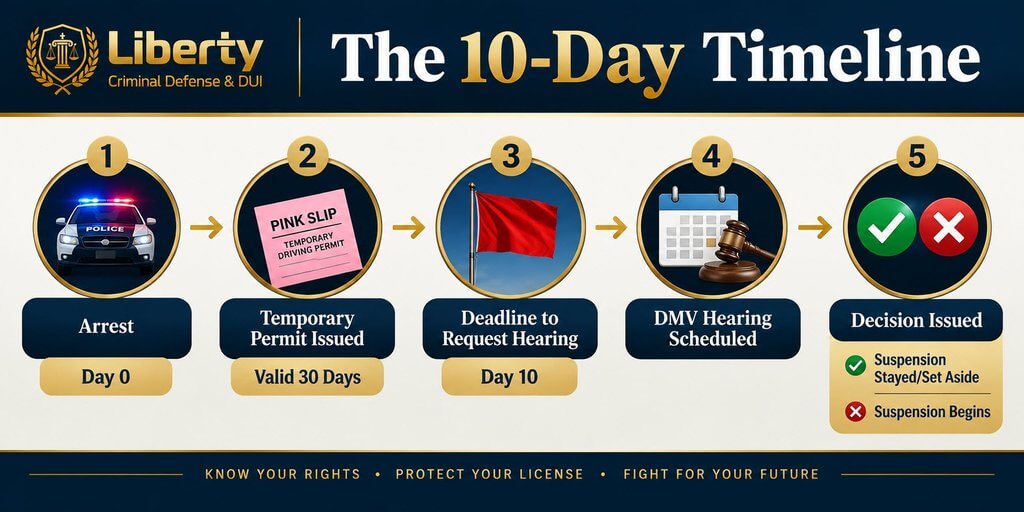
California runs two separate systems after a DUI arrest. One is the criminal court process, which decides guilt and sets fines, probation, or jail time. The other belongs to the Department of Motor Vehicles, and it moves on its own timeline. You have 10 calendar days from the date of your arrest to request a DMV Administrative Per Se hearing, and that count includes weekends and holidays. The arrest date itself counts as day zero, so the clock starts immediately, not the following morning.
Ten days sounds like enough time until you consider what most people are doing in the days right after an arrest. They’re dealing with bail, hiring a lawyer, missing work, and trying to process what just happened. The DMV doesn’t pause for any of that. If you request a DMV hearing before the deadline passes, the suspension stays on hold while your case is pending, sometimes for months. Miss the deadline, and your license suspends automatically about 30 days after the arrest date, regardless of what happens in criminal court later.
The 10-Day Rule: You have 10 calendar days from your arrest, not your court date, to request a hearing with the DMV Driver Safety Office. Weekends and holidays count toward that total. Missing it means an automatic suspension around day 30, even if your criminal case is still open or gets dismissed entirely.
Evan Vargas has seen clients lose their license simply because nobody told them the clock was already running before they walked out of the courthouse for their arraignment. The team at Liberty Criminal Defense & DUI treats this deadline as the first priority in any new DUI case, often filing the request within hours of a client calling.
What is a DMV Hearing?
An Administrative Per Se hearing, usually just called an APS hearing, is not a criminal trial. Nobody is deciding whether you’re guilty of driving under the influence. The hearing officer is only deciding one narrower question: should the DMV suspend your driving privilege. That distinction matters more than most drivers realize, because it means you can win your criminal case and still lose your license, or beat the DMV action and still face criminal penalties in court. The two tracks run in parallel and rarely touch each other.
A DMV hearing is an administrative proceeding, which means different rules, different standards of proof, and a different decision maker than what you’d find in a courtroom. There’s no jury. The hearing officer works for the DMV, reviews the evidence, and issues a written decision. It functions like a mini-trial, with testimony, documents, and legal argument, but it happens over the phone or in person at a DMV Driver Safety Office rather than in front of a judge.
DMV Hearing vs. Criminal Court
| Factor | DMV Administrative Hearing | Criminal Court |
| Purpose | Decides whether to suspend driving privilege | Decides guilt and criminal penalties |
| Who decides | DMV hearing officer | Judge or jury |
| Standard of proof | Preponderance of the evidence | Beyond a reasonable doubt |
| Possible outcome | License suspension, restriction, or reinstatement | Fines, probation, jail, license restrictions tied to conviction |
| Timeline | Weeks after request, before the 30-day permit expires | Can take months |
| Right to attorney | Yes, though not government-appointed | Yes, including appointed counsel if qualified |
Understanding this split is often the first thing Evan Vargas explains to new clients at Liberty Criminal Defense & DUI, because it reframes the whole strategy. Fighting only the criminal case while ignoring your DMV hearing leaves half the problem unaddressed.
What the Hearing Officer Must Prove
At a DMV hearing, the burden sits with the state, not with you. The hearing officer has to establish three separate elements before the DMV can suspend your license, and if any one of them falls apart, the suspension can be set aside.
Checklist: What the DMV Must Establish
- The arresting officer had reasonable cause to believe you were driving under the influence
- The arrest itself was lawful
- Your blood alcohol concentration was 0.08% or higher at the time of driving, or you refused to submit to chemical testing
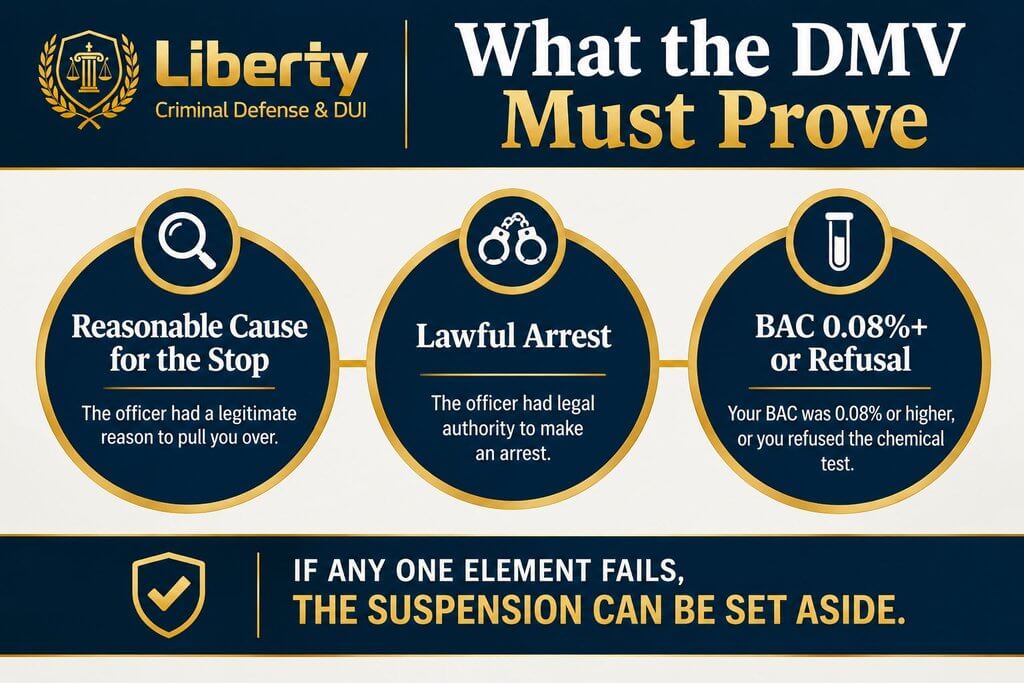
Each element opens a door for challenge. Reasonable cause depends on what the officer actually observed before the stop, not just what’s written in a report after the fact. A lawful arrest requires the officer to follow proper procedure, and any deviation can become an issue. The BAC element depends on how the test was administered, how the sample was handled, and whether the equipment was properly calibrated. Attorneys who handle DMV hearings regularly know where these weak points tend to show up, and Evan Vargas at Liberty Criminal Defense & DUI builds his approach to each hearing around finding them.
What Happens at the Hearing
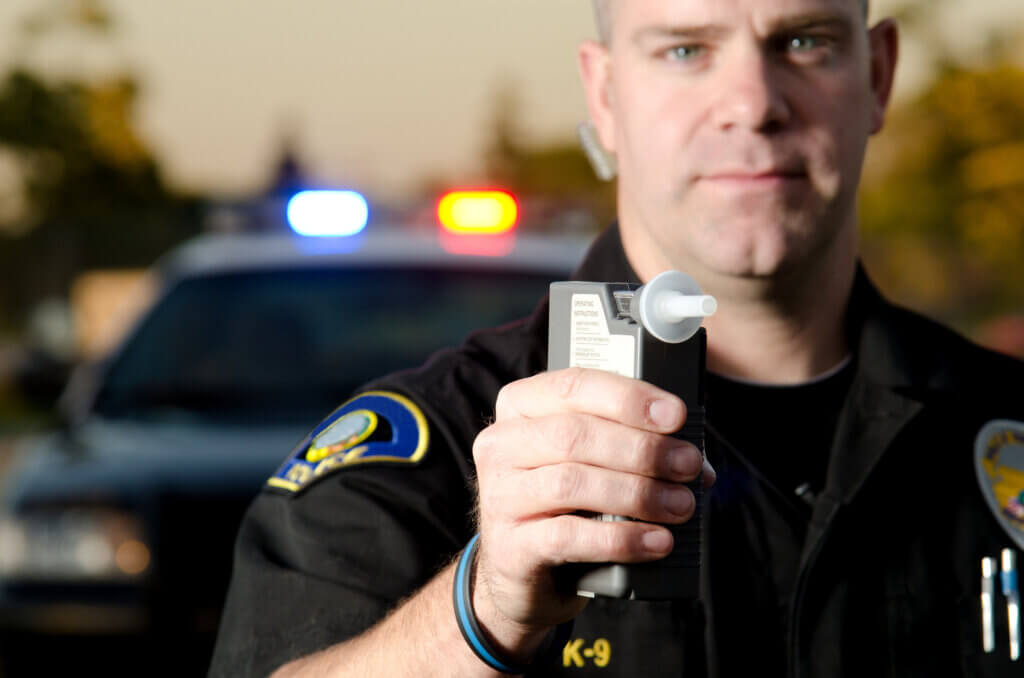
Most DMV hearings happen by telephone unless you specifically request an in-person session at a Driver Safety Office. You, or your attorney, can question the arresting officer under oath if that officer is subpoenaed to appear. You also have the right to review discovery before the hearing, which includes the police report, any dashcam or bodycam footage, breath test calibration records, and the chain of custody documentation for blood draws.
Evidence the DMV Relies On vs. What Can Be Challenged
| DMV Evidence | Possible Challenge |
| Officer’s arrest report | Inconsistencies with video, missing observations of impairment |
| Breath test results | Calibration logs, maintenance records, operator certification |
| Blood test results | Chain of custody gaps, lab handling errors, testing delays |
| Field sobriety test notes | Whether tests were administered correctly, medical or physical factors |
| Refusal documentation | Whether the driver was properly advised of consequences |
A common mistake drivers make is assuming the hearing is a formality they can skip or handle alone with a quick phone call. It isn’t. Discovery requests have deadlines, and subpoenas take time to process. Attorneys who specialize in DMV hearings, like Evan Vargas, request the full evidence file as early as possible so there’s time to actually review it before the hearing date arrives.
Possible Outcomes and Suspension Lengths
If the hearing officer rules against you, the length of the suspension depends on whether it’s a first or second offense, and whether it stems from a BAC over the legal limit or a refusal to test.
APS Suspension Lengths
| Offense Type | Basis | Suspension Length | Restricted License Eligible? |
| First offense | BAC 0.08% or higher | 4 months | Yes, after part of suspension served |
| First offense | Test refusal | 1 year | No restricted license option |
| Second offense | BAC 0.08% or higher | 1 year | Yes, with IID after part served |
| Second offense | Test refusal | 2 years | No restricted license option |
A restricted license lets you drive to work, school, or a required DUI program, and in many cases an Ignition Interlock Device opens up broader driving privileges sooner than a straight suspension would allow. These options don’t kick in automatically. You typically have to apply for them and meet specific conditions, including proof of insurance and enrollment in a state-approved program. Evan Vargas walks clients through which restricted license path fits their situation once the DMV hearing concludes.
Your Rights and How to Protect Yourself
You have real rights in this process, and exercising them matters. You can be represented by an attorney at a DMV hearing, request and review the evidence against you, cross-examine the arresting officer if subpoenaed, and present your own evidence or witnesses. None of that happens automatically. You have to invoke it.
Mistakes drivers commonly make:
- Missing the 10-day deadline because they didn’t know the clock started at arrest
- Talking extensively to the arresting officer or DMV staff without legal advice first
- Posting about the arrest on social media, which can surface as evidence later
- Assuming a good outcome in criminal court will fix the DMV suspension automatically
- Waiting until the week of the hearing to gather documents or find an attorney
Document everything you can remember about the stop while it’s fresh:
- where you were pulled over,
- what the officer said,
- how the field sobriety tests were conducted, and
- any physical or medical conditions that might have affected your performance.
For more detail on what happens procedurally in the days after an arrest, see this breakdown of what happens after a DUI arrest in California. The team at Liberty Criminal Defense & DUI also put together a broader guide covering DUI charges in California if you want the fuller picture beyond just a DMV hearing.
Why You Should Talk to a DUI Defense Attorney Promptly
The 10-day window doesn’t leave much room for research or comparison shopping for a local DUI lawyer. You need to contact an attorney who regularly handles DMV hearings like Evan Vargas who already knows the discovery request format, the subpoena process, and which hearing officers tend to scrutinize which elements more closely. That familiarity saves time you don’t have.
Evan has spent years building a practice around exactly this kind of case, and the value isn’t just showing up at the hearing itself. It’s the groundwork beforehand:
- requesting the arrest report immediately,
- pulling calibration and maintenance records for the testing equipment, and
- identifying which of the three elements the DMV is weakest on.
Waiting even a few days to call an attorney can mean losing the ability to gather that evidence before the hearing date locks in. The team at Liberty Criminal Defense & DUI treats the first phone call as the start of the defense, not a formality before the real work begins.
Frequently Asked Questions
Does requesting a DMV hearing affect my criminal case?
No. a DMV hearing and criminal court are separate proceedings with different standards and outcomes. Requesting a hearing protects your driving privilege but has no direct bearing on the criminal charges you’re facing.
What if I miss the 10-day deadline?
Your license will suspend automatically around 30 days after your arrest date. You may still be able to request a hearing afterward in limited circumstances, but the automatic stay on suspension is lost.
Can I still drive to work while my hearing is pending?
If you requested a DMV hearing before the deadline, your temporary permit remains valid until the hearing officer issues a decision, so you can generally keep driving during that period.
Do I need a lawyer for a DMV hearing?
It isn’t required, but the process involves subpoenas, discovery requests, and legal standards most drivers haven’t encountered before. An attorney familiar with DMV hearings can identify weaknesses in the state’s case that are easy to miss otherwise.
What happens if I refuse the chemical test?
Refusal carries a harsher penalty than a failed test, with a one-year suspension for a first offense and no restricted license option, compared to four months for a BAC-based first offense.
Is a restricted license available after a suspension?
Often yes, particularly for first offenses, once part of the suspension period has been served and program requirements like an IID or DUI course enrollment are met.
Talk to Evan Vargas Before Your 10 Days Run Out
The days right after a DUI arrest move quickly, and the 10-day deadline for a DMV hearing doesn’t wait for the rest of your life to settle down. Requesting a hearing on time preserves your ability to drive while your case works through the system, and it opens the door to challenging the evidence behind the suspension itself. If you or someone you know is facing this deadline, contact Evan Vargas at Liberty Criminal Defense & DUI for a free consultation, available 24/7, or call (909) 787-2073. Acting early gives you the best shot at protecting both your license and your case.
Legal Disclaimer: This article is provided for general informational purposes only and does not constitute legal advice. DUI and DWI laws vary by state, and the details here focus specifically on California law, which may not reflect the law in your jurisdiction or the specific facts of your case. If you have been arrested, speak with a licensed California DUI attorney about your situation before making decisions that affect your license or your case.