
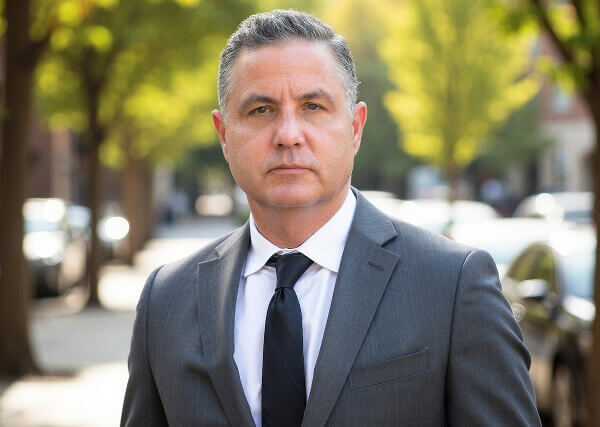
By Evan Vargas, Senior Partner | Liberty Criminal Defense & DUI Lawyers
It is 11:45 p.m. on a Saturday. You are heading home when you see the red-and-blue lights flash in your rearview mirror. Minutes later, you are standing on the shoulder of the road performing field sobriety tests, and your entire future suddenly feels uncertain. If this scenario sounds familiar, you are not alone. California law enforcement agencies make tens of thousands of DUI arrests every year, and each one carries consequences that can reshape a person’s career, finances, family life, and freedom.
A DUI in California is one of the most aggressively prosecuted criminal charges in the state. Whether you are facing a first offense or a repeat charge, the stakes are high, and the legal landscape is nuanced. Laws change, penalties escalate, and the window to protect your driving privileges is surprisingly short. That is why this guide exists.
This resource was written by Evan Vargas, Senior Partner at Liberty Criminal Defense & DUI Lawyers, a firm exclusively focused on criminal defense throughout Southern California. Evan has personally handled hundreds of misdemeanor and felony DUI cases, from routine first-offense charges to serious injury accidents and strike offenses. Everything you read here reflects the current 2026 state of California DUI law — no guesswork, no outdated information.
Bookmark this page. Share it with a loved one. And if you or someone you know has been arrested, read it carefully, then call us.
What Is a DUI in California?
California’s primary DUI statute is Vehicle Code § 23152, which makes it unlawful for any person to operate a motor vehicle while impaired by alcohol, drugs, or a combination of both. The law contains several distinct prohibitions:
- VC § 23152(a) — Driving under the influence of alcohol (impairment standard, regardless of BAC).
- VC § 23152(b) — Driving with a blood alcohol concentration (BAC) of 0.08% or higher.
- VC § 23152(e) — Driving under the influence of drugs (including prescription medications).
- VC § 23152(f) — Driving under the combined influence of alcohol and drugs.
Critically, a driver can be charged under both (a) and (b) simultaneously. Even if your BAC is slightly below 0.08%, prosecutors may still pursue a charge under the impairment standard if the officer observed signs of intoxication.
BAC Limits by Driver Category
| Driver Category | Legal BAC Limit | Governing Code Section |
| Standard adult driver (21+) | 0.08% | VC § 23152(b) |
| Commercial driver (CDL holder) | 0.04% | VC § 15210 |
| Driver under 21 years old | 0.01% (Zero Tolerance) | VC § 23136 |
| Driver on DUI probation | 0.01% | VC § 23154 |
| Rideshare/taxi driver (Uber, Lyft) | 0.04% | VC § 23152(d) |
Implied Consent in California
When you accept a California driver’s license, you automatically consent, under VC § 23612, to chemical testing if lawfully arrested on suspicion of DUI. This is known as the implied consent law. You have the right to choose between a breath test and a blood test after a lawful arrest. Refusing to comply carries mandatory administrative and criminal penalties separate from the DUI itself, including a one-year license suspension for a first refusal.
| ⚠ Important: Refusing a chemical test does not prevent prosecution. Prosecutors can obtain a warrant for a blood draw, and the refusal itself becomes evidence of consciousness of guilt. |
Understanding these foundational rules is the first step toward mounting an effective defense. An experienced DUI lawyer in California can evaluate every element of your charge, from the validity of the traffic stop to the reliability of the BAC test.
The DUI Arrest Process in California
Understanding what happens during a DUI stop can help you recognize whether proper procedures were followed and where your defense may begin.
Step 1: The Traffic Stop
An officer must have reasonable suspicion, a specific, articulable reason, to pull you over. Common triggers include swerving, speeding, a broken taillight, or failure to signal. If no valid reason existed, everything that followed may be suppressible.
Step 2: Initial Observations
Officers are trained to note signs of impairment: bloodshot or watery eyes, slurred speech, the odor of alcohol, open containers, and unusual behavior. These observations form the basis for the next step — field sobriety tests.
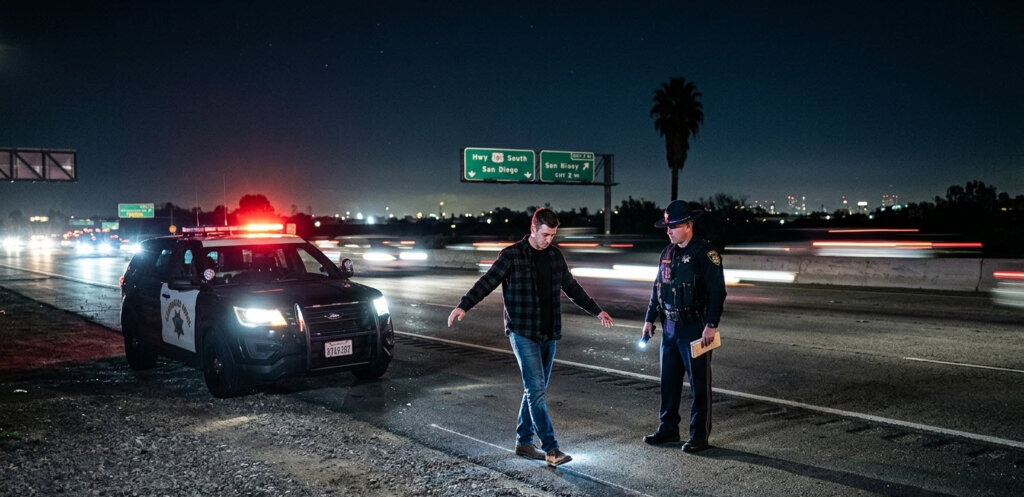
Step 3: Field Sobriety Tests (FSTs)
The three standardized field sobriety tests validated by the National Highway Traffic Safety Administration (NHTSA) are:
- Horizontal Gaze Nystagmus (HGN) — The officer watches your eyes track a moving object for involuntary jerking.
- Walk-and-Turn (WAT) — You walk heel-to-toe along a line, turn, and return.
- One-Leg Stand (OLS) — You balance on one foot while counting aloud.
Field sobriety tests are voluntary in California. You are not legally required to perform them, and many attorneys advise clients to politely decline, as physical conditions, nervousness, and uneven pavement can produce false failures.
Step 4: Preliminary Alcohol Screening (PAS) Test
Before arrest, an officer may request a PAS test, a handheld roadside breathalyzer. For drivers 21 and older who are not on DUI probation, this test is also voluntary. However, refusing a post-arrest chemical test triggers implied consent penalties under VC § 23612.
Step 5: Arrest and Chemical Testing
If the officer determines there is probable cause, you will be arrested and transported to a police station or hospital for an evidentiary breath or blood test. You select the type of test. Results from these tests, not the PAS, are what prosecutors use in court.
Step 6: Booking and Release
Following testing, you will be booked and may be held until sober, released on your own recognizance, or required to post bail. You will receive a notice to appear in court and, critically, a temporary pink license that serves as your driving permit for only 30 days. You must act fast.
| ⚠ 10-Day DMV Deadline: After a DUI arrest, you have only 10 calendar days to request a DMV Administrative Per Se (APS) hearing. Missing this deadline results in automatic license suspension. Contact a DUI attorney immediately. |
Current California DUI Penalties (2026)
California DUI penalties follow a tiered structure based on the number of offenses within a 10-year lookback period (VC § 23622). Prior convictions within that window are treated as priors for sentencing enhancement purposes. Here is what you are facing:
| Penalty Element | 1st Offense | 2nd Offense | 3rd Offense |
| Jail / Custody | 96 hours – 6 months | 90 days – 1 year | 120 days – 1 year |
| Fines & Assessments | ~$1,800 – $3,600+ | ~$1,800 – $4,000+ | ~$1,800 – $18,000+ |
| Informal Probation | 3 – 5 years | 3 – 5 years | 3 – 5 years |
| License Suspension | 6 months (APS: 4 mo.) | 2 years | 3 years |
| DUI School | 3 or 9 months | 18 months (SB-38) | 30 months (SB-38) |
| IID Required | Yes (see IID section) | Yes — 1 year | Yes — 2 years |
| SR-22 Insurance | Yes — 3 years | Yes — 3 years | Yes — 3 years |
| ⚠ 2026 Update: California’s statewide Ignition Interlock Device (IID) pilot program, originally scheduled to expire, has been extended through January 1, 2033, under SB 1046. IIDs are now required for virtually all DUI convictions statewide, regardless of county. |
Enhanced Penalties — Aggravating Factors
Certain circumstances trigger mandatory penalty enhancements on top of base sentencing:
- BAC of 0.15% or higher — additional jail time and longer DUI school.
- BAC of 0.20% or higher — further enhancements; court may impose 9-month school on a first offense.
- Refusal to submit to chemical testing — mandatory 48-hour jail and longer license suspension.
- Child passenger under 14 years old — misdemeanor child endangerment charge (VC § 23572) adds 48 hours to 90 days per child.
- Excessive speeding (20+ mph over limit or 30+ mph on freeway) — additional 60 days jail.
- Prior conviction with probation — mandatory 48-hour consecutive jail.
Penalties on paper can look manageable until you realize they compound quickly. A skilled California DUI attorney can negotiate reductions, argue for dismissals of enhancements, and in some cases pursue diversion or reduced charges.
DMV Administrative Actions vs. Criminal Court
One of the most misunderstood aspects of a California DUI is that you are actually facing two separate proceedings: one in criminal court and one with the Department of Motor Vehicles (DMV). These run on parallel tracks and each can result in its own penalties.
The Administrative Per Se (APS) Hearing
When you are arrested for DUI and your BAC registers 0.08% or higher (or you refuse testing), the arresting officer immediately confiscates your license and issues a temporary permit. The DMV then automatically schedules an APS hearing, but only if you request one within 10 calendar days of your arrest.
The APS hearing is administrative, not criminal. Its sole purpose is to determine whether the DMV should suspend your license. Even if you win your criminal case, the DMV can still suspend your driving privileges and vice versa.
- First APS suspension (BAC 0.08%+): 4 months
- First APS suspension (refusal): 1 year, no restricted license
- Second APS suspension (BAC): 1 year
- Second APS suspension (refusal): 2 years, no restricted license
Restricted Licenses and SR-22
After serving a portion of the APS suspension, many drivers qualify for a restricted license that allows driving to and from work and DUI school. For most first-offense DUI convictions, installation of an IID allows for an unrestricted license after the mandatory suspension period.
An SR-22 is not insurance; it is a certificate filed by your insurance carrier with the DMV confirming that you carry the minimum required liability coverage. It is required following most DUI convictions and must be maintained for three years. Letting it lapse results in immediate license suspension.
Ignition Interlock Device (IID) Requirements in California
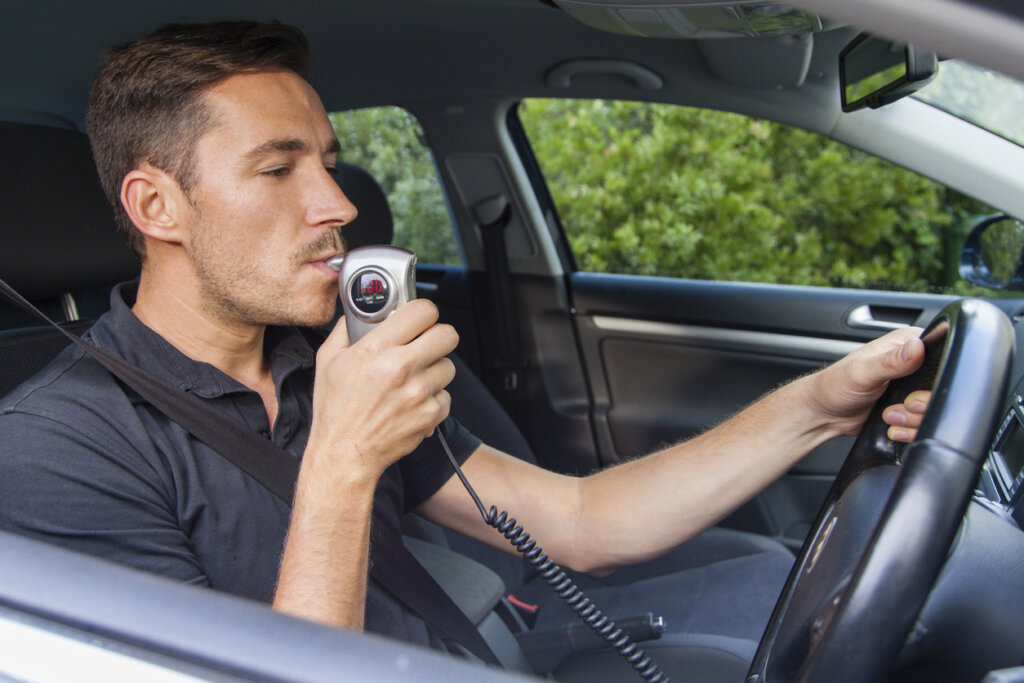
An Ignition Interlock Device is a breath-testing unit wired into your vehicle’s ignition. Before the car will start, you must blow into the device. If alcohol above the programmed threshold is detected, the vehicle will not start. Rolling retests are also required while driving.
Who Must Install an IID?
Under California’s statewide IID program (extended through 2033), courts are required to order IID installation for virtually all DUI convictions. Specific duration requirements:
- First offense DUI (no injury): Minimum 6 months IID
- Second offense DUI: Minimum 1 year IID
- Third offense DUI: Minimum 2 years IID
- Fourth or subsequent offense: Minimum 3 years IID
- DUI with injury: 1 year minimum (more for repeat offenders)
IID Costs
The IID program is not free. Typical costs include:
- Installation fee: $70 – $150
- Monthly monitoring/calibration: $60 – $90
- Removal fee: $50 – $100
Low-income drivers may qualify for a fee waiver through the IID Assistance Program administered by the DMV.
| ⚠ Compliance Matters: Tampering with, bypassing, or having someone else breathe into your IID is a separate criminal offense and will result in immediate license revocation and extended IID requirements. |
Common Defenses to Beat or Reduce a DUI Charge in California
A DUI arrest is not a conviction. In California, skilled DUI defense attorneys routinely challenge arrests on procedural, scientific, and constitutional grounds. Here are the defenses most likely to be relevant in your case:
| Defense | What It Challenges | Potential Outcome |
| Unlawful traffic stop | Lack of reasonable suspicion to pull you over | All evidence suppressed; case dismissed |
| Rising blood alcohol | BAC was rising at time of testing, not while driving | Reduced charge or acquittal |
| Faulty breathalyzer / improper calibration | Breathalyzer not maintained or calibrated per regulations | BAC result excluded |
| Improper blood draw procedure | Blood not drawn by qualified person; contamination | Blood result excluded |
| Medical condition mimicking impairment | GERD, diabetes, PTSD, or other condition causing false signs | Reduced or dismissed |
| Mouth alcohol contamination | Recent use of mouthwash, belching, or dental work skewed results | BAC result challenged |
| Lack of actual impairment | Officer observations were subjective or improper | Acquittal at trial |
| Miranda rights violation | Incriminating statements obtained without Miranda warning | Statements suppressed |
| Chain of custody error | Blood sample mishandled or mislabeled after collection | Blood result excluded |
| Necessity / emergency | Driver operated vehicle to prevent greater harm | Full defense — case dismissed |
The most powerful defenses are often invisible to people without legal training. Breathalyzers must be calibrated every 10 days or 150 uses. Blood samples must be stored according to Title 17 of the California Code of Regulations. Officers must follow precise procedures at every step. Any deviation creates an opening — and experienced DUI attorneys know where to look.
At Liberty Criminal Defense & DUI, Evan Vargas begins every case by demanding all discovery, such as police reports, video footage, calibration records, chain-of-custody documentation, and lab results. The goal is simple: find every weakness and exploit it for the client’s benefit.
Special DUI Situations
Underage DUI (Under 21)
California’s Zero Tolerance law (VC § 23136) prohibits drivers under 21 from operating a vehicle with any measurable BAC, 0.01% or higher. Even a single drink can trigger charges. Penalties include a 1-year license suspension and, if the BAC reaches 0.05% or higher, a separate infraction under VC § 23140. If the minor’s BAC reaches 0.08%, adult DUI penalties apply in full.
DUI With Injury (VC § 23153)
When a DUI involves injury to another person, the charge becomes a wobbler — meaning prosecutors can file it as either a misdemeanor or a felony depending on the severity of injury and the defendant’s criminal history. Felony DUI with injury carries:
- 16 months, 2 years, or 3 years in state prison
- Additional 1-year enhancement per injured victim (up to 3 years)
- Great bodily injury (GBI) enhancement of 3 additional years
- Strike under California’s Three Strikes Law if GBI is alleged
- Restitution to victims
Felony DUI
A standard DUI becomes a felony in four circumstances:
- The defendant has three or more prior DUI or wet reckless convictions within 10 years.
- The defendant has a prior felony DUI conviction.
- The current offense caused injury or death to another person.
- The defendant caused death, potentially resulting in a charge of gross vehicular manslaughter while intoxicated (Penal Code § 191.5) or second-degree murder (Watson murder) in extreme cases.
Drug DUI (DUID)
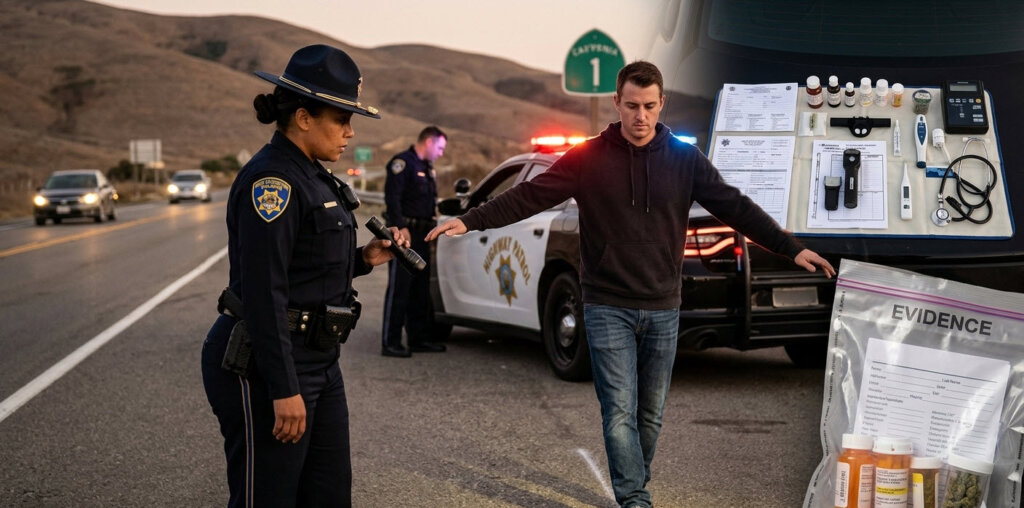
You do not need to consume alcohol to be charged with DUI in California. Operating a vehicle while impaired by marijuana (even legally purchased), prescription medications, over-the-counter drugs, or illegal substances violates VC § 23152(e) and (f). Unlike alcohol, there is no per se BAC limit for drugs; impairment is the standard. Officers trained as Drug Recognition Evaluators (DREs) are certified to conduct extended evaluations.
DUI While on Probation
If you are convicted of DUI while already serving DUI probation, penalties are dramatically more severe. Even a BAC as low as 0.01% is a violation. Courts treat this as a probation violation in addition to a new criminal charge, often resulting in custody time.
What to Do Immediately After a DUI Arrest in California
The decisions you make in the hours and days after a DUI arrest can profoundly affect the outcome of your case. Follow this step-by-step checklist:
- Stay calm and be respectful. Do not argue with the officer or resist arrest. Anything you say can and will be used against you.
- Invoke your right to remain silent. Politely state: “I am invoking my right to remain silent and would like to speak with an attorney.” Then say nothing more.
- Submit to the post-arrest chemical test. Refusing triggers additional penalties under the implied consent law. You may decline the pre-arrest PAS test if you are 21 or older.
- Note every detail you can remember. As soon as possible, write down: the officer’s name and badge number, what you consumed, when you consumed it, the exact route you drove, road and lighting conditions, and anything the officer said or did.
- Call a DUI attorney – not tomorrow, today. The 10-day DMV deadline begins the moment of your arrest. Missing it waives your right to contest the license suspension.
- Request a DMV APS hearing within 10 calendar days. Your attorney will typically do this for you, but confirm it is done.
- Do not post anything on social media. Photos, check-ins, or statements can surface as evidence.
- Gather documentation. Receipts, witness contact information, surveillance footage, or anything that could help establish a timeline.
- Appear at all court dates. Missing a court appearance results in a bench warrant for your arrest.
- Follow all release conditions. Do not consume alcohol or drugs if it is a condition of your release.
| ⚠ Pro Tip from Evan Vargas: The most damaging thing a DUI defendant can do is wait. Evidence degrades, witnesses become unavailable, and deadlines pass. The sooner you retain experienced representation, the more options you have. |
How to Choose the Right California DUI Lawyer
Not every criminal defense attorney has the depth of experience required to effectively fight a DUI charge. When evaluating a DUI attorney near you in California, consider the following:
- DUI-specific experience — Does the attorney regularly handle DUI cases, or is it a small part of a general practice?
- Trial experience — Is the attorney willing and able to take your case to trial if necessary?
- DMV hearing experience — Navigating the APS hearing requires separate expertise from criminal court.
- Knowledge of local courts — Relationships with local prosecutors and judges matter. Outcomes often vary by courthouse.
- Transparency about fees — Avoid firms that quote suspiciously low flat fees without explaining what is included.
- Availability and communication — DUI cases move quickly. Your attorney must be reachable.
Why Clients Choose Evan Vargas and Liberty Criminal Defense & DUI
Evan Vargas is a Southern California native who built his practice exclusively around criminal defense. His clients face serious consequences, and he takes that seriously. Here is what distinguishes his representation:
- Extensive DUI case experience — From first-offense misdemeanors to felony DUI with serious injury and prior strikes.
- Geographic reach — Evan regularly appears in courts across Orange County, Riverside County, San Bernardino County, the Inland Empire, and Los Angeles.
- Aggressive, personalized strategy — Every case receives an individual analysis. No cookie-cutter approaches.
- Full-service representation — Criminal defense and DMV hearings handled under one roof.
- Direct attorney access — Clients work directly with Evan, not passed off to paralegals.
- Free consultation — Evaluate your case with no financial obligation.
Frequently Asked Questions About DUI in California
What is the difference between a DUI and a wet reckless in California?
A “wet reckless” (VC § 23103.5) is a reduced plea bargain where the DUI charge is reduced to reckless driving with a notation that alcohol was involved. It carries lighter penalties, no mandatory IID for first offenders, and may result in no mandatory license suspension. However, it still counts as a prior offense if you are charged with DUI again within 10 years.
Can a first-offense DUI be dismissed in California?
Yes, dismissal is possible, though not guaranteed. Cases may be dismissed if the traffic stop was unlawful, the chemical test results were unreliable, constitutional violations occurred, or the prosecution lacks sufficient evidence. An experienced DUI attorney should evaluate your case for dismissal opportunities before you accept any plea.
How long does a DUI stay on my record in California?
A DUI conviction remains on your California criminal record permanently unless expunged. Expungement under Penal Code § 1203.4 is available after completing probation, but does not remove the conviction from your DMV record. For DMV purposes and future DUI sentencing, the offense counts for 10 years from the conviction date.
Will I lose my license after a DUI in California?
Not necessarily, but you face potential suspension from both the DMV and the court. If you request an APS hearing within 10 days and prevail, your driving privileges may be preserved. An IID may allow you to continue driving with a restricted or unrestricted license even if a suspension is imposed.
Can I be charged with DUI if I was legally parked?
California courts have generally held that the vehicle must be in motion or about to be set in motion for a DUI charge under VC § 23152. Being in a legally parked, non-moving vehicle is typically not sufficient, but sitting in a car with the engine running creates risk in some circumstances. Each situation depends on the specific facts.
What happens if I refuse a breathalyzer in California?
Refusing a post-arrest chemical test under the implied consent law (VC § 23612) triggers mandatory penalties: a 1-year DMV license suspension for a first refusal, 2 years for a second, and 3 years for a third. The refusal also cannot be used to avoid prosecution; officers can obtain a search warrant for a blood draw.
How much does a DUI cost in California?
The total financial impact of a California DUI often reaches $10,000 or more when accounting for fines, court assessments, DUI school fees, IID installation and monitoring, increased insurance premiums (SR-22), towing/impound fees, and attorney fees. A second or third offense can approach $20,000 or higher.
Can I get a DUI expunged in California?
Yes. Under PC § 1203.4, a misdemeanor DUI conviction can be expunged after completing probation (or after early termination of probation is granted). Felony DUI convictions may also be eligible if they were not served in state prison. Expungement does not erase the conviction from DMV records and does not eliminate the 10-year lookback for sentencing purposes.
Does a California DUI affect my commercial driver’s license (CDL)?
Yes, significantly. A DUI conviction, even in a personal vehicle, disqualifies a CDL holder from operating a commercial vehicle for one year. A second DUI results in lifetime CDL disqualification. This can effectively end a professional driving career.
What is the 10-year lookback period for DUI in California?
California uses a 10-year window (measured from arrest date to arrest date) to determine whether prior DUI offenses will be counted for enhanced sentencing. A DUI conviction that occurred more than 10 years before your current arrest typically will not count as a prior for sentencing enhancement purposes, though it may still appear on your record.
Can I fight a DUI charge if my BAC was over 0.08%?
Absolutely. Many successful DUI defenses target BAC results rather than the fact of consumption. Challenges include faulty breathalyzer calibration, improper blood draw procedures, mouth alcohol contamination, medical conditions such as GERD, and the rising blood alcohol defense, arguing that your BAC was still rising at the time of driving but had crossed 0.08% only by the time of testing.
What is a Watson murder charge in a DUI case?
A Watson murder charge arises when a person with a prior DUI conviction causes a fatal accident while driving under the influence. Under the “Watson advisal,” a warning given to DUI defendants that acknowledges the life-threatening danger of drunk driving, prosecutors can argue the defendant acted with implied malice, supporting a second-degree murder charge under Penal Code § 187.
Do I need a lawyer for a first DUI in California?
While you are not legally required to have an attorney, it is strongly advisable. A DUI attorney can identify defenses, negotiate reductions, handle your DMV hearing, challenge evidence, and potentially prevent a conviction that would otherwise remain on your record for life. The cost of an attorney is typically far less than the long-term financial and professional consequences of a conviction.
How long does a California DUI case take?
A straightforward misdemeanor DUI case typically resolves in 3 to 6 months. Cases involving contested evidence, DMV hearings, or trial preparation can take 12 months or longer. Felony DUI cases with serious injury or prior strikes often extend beyond a year.
What does a DUI defense attorney actually do?
A skilled California DUI attorney will: (1) challenge the legality of your traffic stop; (2) contest the field sobriety and chemical test results; (3) represent you at your DMV APS hearing; (4) negotiate with prosecutors for reduced charges or dismissal; (5) file pretrial motions to suppress evidence; and (6) represent you at trial if necessary.
Every DUI Case Is Unique And So Is Your Defense
A DUI charge in California is serious. It can cost you your license, your freedom, your job, and your reputation. The state’s DUI laws are complex and constantly evolving with changes to IID requirements, probation rules, and sentencing guidelines affecting outcomes in real time.
But here is what the statistics do not tell you: DUI cases are won and lost on details. The precise wording of an officer’s report. The calibration log of a breathalyzer. The chain-of-custody form on a blood vial. A constitutional violation that occurred before you even stepped out of the car. These are the openings that experienced DUI lawyers look for and exploit.
No guide, no matter how comprehensive, can replace the advice of an attorney who has reviewed the specific facts of your case. If you or someone you love has been arrested for DUI in California, do not wait. Do not assume the evidence is airtight. And do not face the system alone.

| Ready to Fight Your DUI Charge? Contact Evan Vargas Today. Free Consultation | Available 24/7 | Se Habla Español Call Liberty Criminal Defense & DUI: 909-773-2356 |
Serving Orange County, Riverside County, San Bernardino County, the Inland Empire, and Los Angeles.
About the Author
| Evan Christopher Vargas is a Southern California native and Senior Partner at Liberty Criminal Defense & DUI Lawyers. With extensive experience handling misdemeanor and felony DUI cases, including injury cases and serious strike offenses. Evan has built a reputation for aggressive, strategic defense throughout Orange County, Riverside County, San Bernardino County, the Inland Empire, Los Angeles, and beyond. Read Evan’s full attorney profile. |
Legal Disclaimer: This blog post is intended for general informational purposes only and does not constitute legal advice. Reading this content does not create an attorney-client relationship. Laws change and individual circumstances vary. If you are facing a DUI charge in California, consult a licensed California attorney for advice specific to your situation.