
On November 4, 2014, California voters passed Proposition 47 with approximately 60% approval, fundamentally reshaping the state’s approach to nonviolent criminal offenses. This landmark ballot measure, officially titled the “Safe Neighborhoods and Schools Act,” represented one of the most significant criminal justice reforms in California’s history. The proposition reclassified certain nonviolent felonies as misdemeanors, reduced penalties for low-level offenses, and redirected state savings toward rehabilitation and education programs.
For individuals facing drug possession charges or those with prior convictions, understanding Proposition 47 is essential. This comprehensive reform has created new opportunities for reduced sentences, expungement possibilities, and a fresh start for thousands of Californians. If you or someone you know has been affected by drug possession charges, consulting with an experienced criminal defense attorney can help you navigate these complex changes and determine whether you qualify for relief under Prop 47.
Understanding Proposition 47: The Basics
What Is Proposition 47?
Proposition 47 amended several sections of California’s Penal Code and Health and Safety Code to reduce specific nonviolent felonies to misdemeanors. The measure targeted low-level property crimes and simple drug possession offenses, recognizing that these cases often involve individuals struggling with addiction or poverty rather than dangerous criminals who pose a threat to public safety.
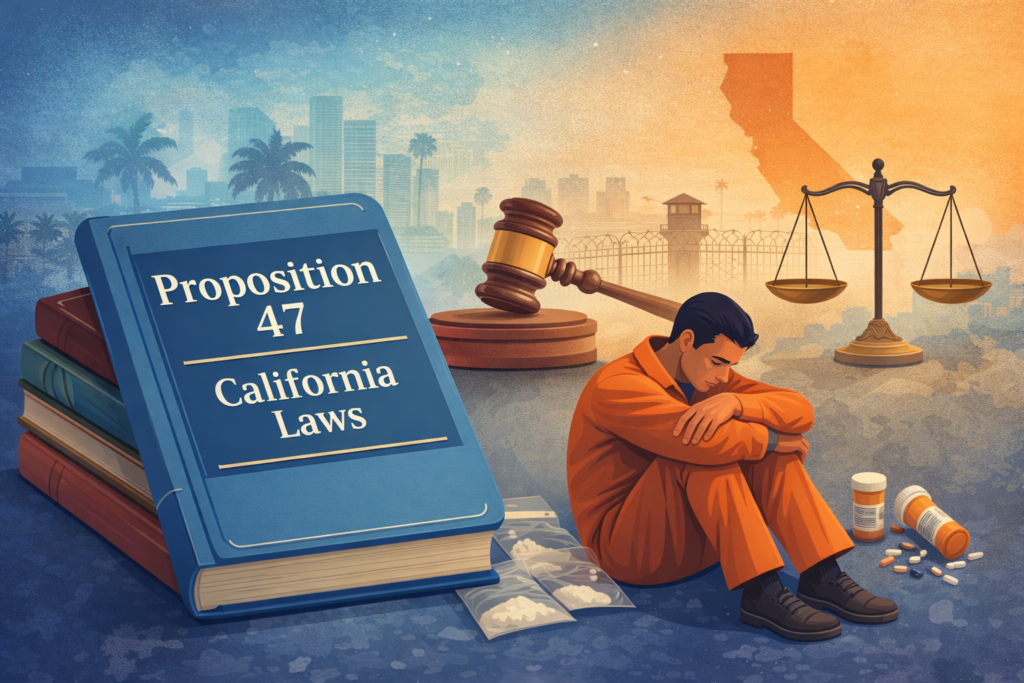
Before Prop 47’s passage, California maintained some of the strictest sentencing laws in the nation for these offenses. Simple possession of controlled substances could result in felony convictions carrying potential prison sentences, creating lasting consequences that affected employment, housing, and educational opportunities. The proposition sought to address this imbalance by treating drug possession primarily as a public health issue rather than solely a criminal matter.
Reclassification of Drug Possession Offenses
The most significant change under Proposition 47 relates to California Health and Safety Code Section 11350, which addresses possession of controlled substances. Prior to the proposition’s passage, violations of this section were prosecuted as felonies or“wobblers” (offenses that could be charged as either felonies or misdemeanors at the prosecutor’s discretion).
Under Prop 47, simple possession for personal use of most controlled substances is now classified as a misdemeanor. This includes possession of drugs such as cocaine, heroin, methamphetamine, MDMA (ecstasy), and certain prescription medications without a valid prescription. The reclassification applies specifically to possession for personal use, not possession with intent to sell, which remains a felony offense.
Exceptions to Reclassification
While Proposition 47 significantly expanded misdemeanor treatment for drug possession, important exceptions exist. Individuals with prior convictions for serious or violent felonies, as defined by California’s Penal Code Section 667(e)(2)(C)(iv), do not qualify for misdemeanor treatment under Prop 47. Additionally, those required to register as sex offenders under Penal Code Section 290(c) are excluded from the proposition’s benefits.
These exceptions ensure that the measure’s reduced penalties apply primarily to individuals with nonviolent criminal histories, maintaining stricter consequences for those with more serious prior offenses.
Sentencing Changes Under Prop 47
For offenses reclassified under Proposition 47, the maximum sentence has been reduced from potential prison time to county jail incarceration not exceeding one year. In many cases, judges have discretion to impose alternative sentencing options, including probation, drug treatment programs, community service, or a combination of these alternatives.

This shift represents a fundamental change in California’s approach to drug possession cases. Rather than automatically pursuing incarceration, prosecutors and judges now have greater flexibility to consider individualized treatment plans that address underlying addiction issues. Many defendants charged with simple possession may be eligible for drug diversion programs, which can result in case dismissals upon successful completion of treatment requirements.
Impact on Repeat Offenders
Even for individuals with prior drug possession convictions, subsequent offenses remain misdemeanors under Prop 47, provided the individual doesn’t fall within one of the specified exceptions. This represents a significant departure from previous California law, which allowed prosecutors to elevate subsequent possession charges to felonies based on prior convictions.
Retroactive Relief and Resentencing
One of Proposition 47’s most transformative provisions is itsretroactive application. Through Penal Code Section 1170.18, individuals previously convicted of felonies that would now be classified as misdemeanors under Prop 47 can petition the court for resentencing or redesignation of their convictions.
This retroactive relief is available in two primary scenarios:
First, individuals currently serving sentences for eligible felony convictions can petition for resentencing. If granted, the court will resentence the individual as if they had been convicted of a misdemeanor, which may result in immediate release or a significantly reduced sentence.
Second, individuals who have already completed their sentences for eligible felonies can petition to have their convictions redesignated as misdemeanors on their criminal records.
The Petition Process
The petition process under Section 1170.18 requires filing appropriate documentation with the superior court that handled the original conviction. The petition must identify the specific conviction(s) eligible for relief and demonstrate that the petitioner meets all requirements under Prop 47.
Courts are required to grant petitions for resentencing or redesignation unless they determine that doing so would pose an unreasonable risk of danger to public safety. This standard provides significant protection for petitioners while allowing courts to deny relief in truly dangerous situations. However, the burden rests on the prosecution to demonstrate this risk, not on the petitioner to prove their safety.
For individuals who have completed their sentences, successful redesignation of a felony to a misdemeanor can have profound consequences. This change can restore certain rights, improve employment prospects, eliminate barriers to professional licensing, and reduce collateral consequences associated with felony convictions.
Property Crimes Addressed by Prop 47
While drug possession charges garnered significant attention, Proposition 47 also reclassified several property crimes from felonies to misdemeanors when the value of property taken or damaged does not exceed $950. These offenses include shoplifting, petty theft, receiving stolen property, writing bad checks, and check forgery.
The $950 threshold represents a practical dividing line between petty offenses and more serious property crimes. This distinction recognizes that minor theft often results from desperation or poor judgment rather than criminal sophistication, and that misdemeanor treatment may be more appropriate for these lower-level offenses.
The Safe Neighborhoods and Schools Fund
Proposition 47 established the Safe Neighborhoods and Schools Fund to receive state savings generated by the measure’s implementation. These savings result primarily from reduced incarceration costs as fewer individuals serve prison sentences for reclassified offenses.
The proposition mandates specific allocation of these funds. Sixty-five percent is directed to the Board of State and Community Corrections for grant programs supporting mental health treatment, substance abuse treatment, and diversion programs for individuals in the criminal justice system. Twenty-five percent goes to the Department of Education for dropout prevention and truancy reduction programs in K-12 schools. The remaining ten percent is allocated to the California Victim Compensation Board to support trauma recovery services for crime victims.
Investment in Treatment and Prevention
This funding structure reflects Proposition 47’s underlying philosophy: that reducing incarceration for low-level offenses creates an opportunity to invest in programs that address root causes of criminal behavior. By directing savings toward mental health services, substance abuse treatment, and education, the measure aims to reduce recidivism and prevent future criminal activity.
Mental health and substance abuse treatment programs funded through Prop 47 serve individuals who might otherwise cycle through the criminal justice system without addressing underlying issues. These programs provide counseling, medication-assisted treatment, housing assistance, and employment services designed to support long-term recovery and stability.
Legal Process and Court Procedures
Under Proposition 47, prosecutors must charge eligible drug possession and property crimes as misdemeanors rather than felonies. This removes prosecutorial discretion that previously allowed elevation to felony status in many cases. However, prosecutors retain authority to pursue felony charges when circumstances fall outside Prop 47’s parameters, such as possession with intent to sell or cases involving defendants with disqualifying prior convictions.
Court Hearings and Defense Strategy
For current cases, defense attorneys can leverage Prop 47’s provisions to advocate for misdemeanor treatment, alternative sentencing, and participation in drug treatment programs. Many California counties have developed specialized drug courts that focus on rehabilitation rather than punishment, offering defendants intensive supervision combined with treatment services.
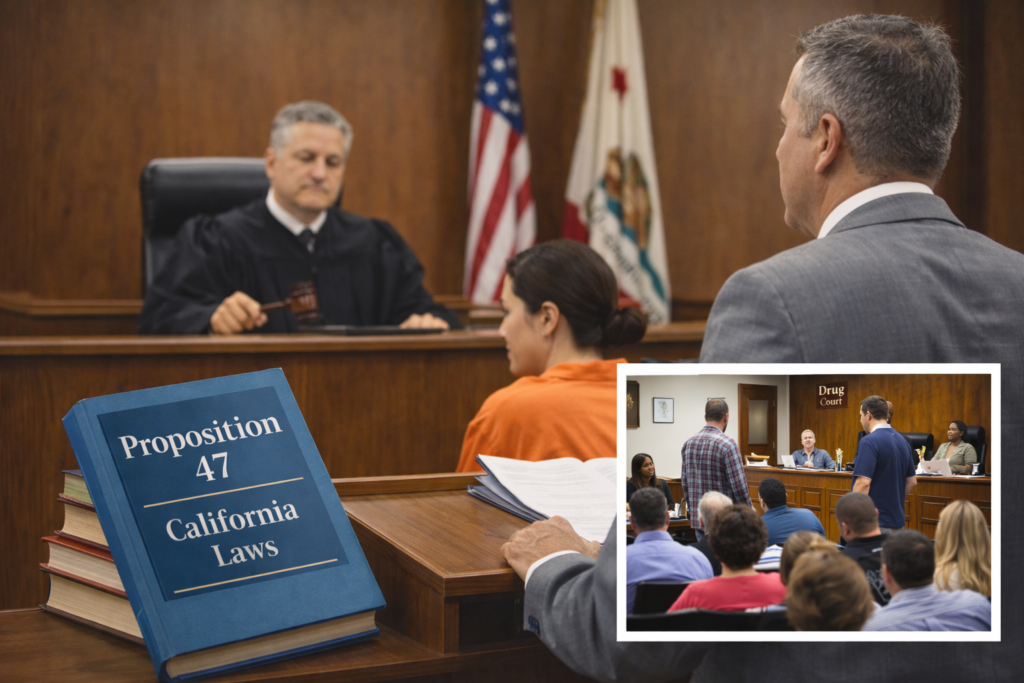
Experienced defense counsel can also identify whether clients qualify for resentencing or redesignation of prior convictions. This requires careful review of criminal history, analysis of conviction dates and offenses, and strategic presentation to the court. The complexity of these proceedings underscores the importance of working with an attorney who understands Prop 47’s intricacies and can navigate the petition process effectively.
Criticisms and Ongoing Debates
Some law enforcement officials and prosecutors have expressed concerns about Proposition 47’s impact on public safety. Critics argue that reduced penalties may diminish deterrent effects and that some individuals released under the measure have reoffended. However, comprehensive studies examining recidivism rates and crime statistics have produced mixed results, with some research suggesting Prop 47 has not led to significant increases in overall crime rates.
Reform Advocate Perspectives
Supporters of Proposition 47 point to reduced incarceration costs, decreased jail and prison populations, and increased funding for treatment and prevention programs as evidence of the measure’s success. They argue that treating drug possession primarily as a public health issue rather than a criminal matter produces better long-term outcomes for individuals and communities.
The debate continues as California evaluates Prop 47’s long-term effects and considers potential modifications or additional reforms. Understanding these ongoing discussions helps provide context for individuals navigating the current criminal justice system.
Practical Implications for Defendants
Immediate Benefits
For individuals currently facing drug possession charges, Proposition 47 significantly reduces potential penalties. Misdemeanor convictions carry maximum county jail sentences of one year, compared to potential prison sentences that felony convictions previously authorized. Many defendants receive probation instead of jail time, particularly for first-time offenses.
Misdemeanor treatment also affects pre-trial proceedings. Defendants charged with misdemeanors typically face lower bail amounts and may be released on their own recognizance more readily than those facing felony charges. This allows individuals to maintain employment, housing, and family relationships while their cases proceed.
Long-Term Consequences
The distinction between misdemeanor and felony convictions extends far beyond sentencing. Felony convictions can result in loss of voting rights, restrictions on firearm ownership, immigration consequences for non-citizens, difficulty obtaining professional licenses, challenges securing employment and housing, and ineligibility for certain government benefits.
Misdemeanor convictions, while still serious, generally carry fewer collateral consequences. For many individuals, avoiding a felony conviction preserves opportunities for rehabilitation and reintegration into society. This is particularly important for young adults facing first-time drug possession charges who can benefit from a second chance without the lifelong burden of a felony record.
Working with a Criminal Defense Attorney
While Proposition 47 provides significant benefits for individuals facing drug possession charges, navigating the legal system remains complex. An experienced criminal defense attorney like Evan Vargas at Liberty Criminal Defense & DUI can evaluate whether you qualify for Prop 47 relief, identify potential defenses to the charges, negotiate with prosecutors for favorable outcomes, pursue alternative sentencing options, including treatment programs, and file petitions for resentencing or redesignation of prior convictions.

Defense attorneys familiar with California drug laws and Proposition 47’s provisions can also identify issues that may not be immediately apparent, such as potential Fourth Amendment violations in search and seizure cases, chain of custody problems with evidence, or procedural errors that could lead to case dismissal.
Strategic Defense Planning
Every drug possession case presents unique circumstances that require individualized legal strategies. An attorney can assess factors such as the specific substance involved, the amount possessed, circumstances of arrest, prior criminal history, and available alternative sentencing programs. This comprehensive evaluation forms the basis for developing a defense strategy tailored to achieving the best possible outcome.
For individuals with prior felony convictions now eligible for redesignation under Prop 47, an attorney can guide them through the petition process, gather supporting documentation, present compelling arguments to the court, and address any opposition from prosecutors. This legal support significantly increases the likelihood of successful relief.
Understanding Your Rights Under Prop 47
Proposition 47 represents a fundamental shift in California’s approach to drug possession and low-level property crimes. By reclassifying these offenses as misdemeanors, providing retroactive relief for past convictions, and investing state savings in treatment and prevention programs, the measure has created new opportunities for individuals affected by the criminal justice system.
Whether you’re currently facing drug possession charges or have prior convictions that may qualify for relief, understanding Prop 47’s provisions is essential. The measure’s benefits extend beyond reduced sentences to include improved prospects for employment, housing, and rebuilding your life after a criminal conviction.
However, accessing these benefits requires navigating complex legal procedures and meeting specific eligibility requirements. Working with an experienced criminal defense attorney ensures that your rights are protected and that you receive the full benefits available under Proposition 47.
Why Local Experience in Southern California Matters
Criminal justice is often local. Evan Vargas routinely appears in courthouses across Riverside, San Bernardino, and Orange Counties, including the Riverside Hall of Justice and the Central Justice Center in Santa Ana.
Knowing the tendencies of local judges and prosecutors allows us to advocate effectively for Prop 47 relief. With decades of experience, we don’t just see a case number; we see a person with a future worth fighting for.

Contact Evan Vargas for a Consultation
If you or a loved one is facing drug possession charges in California, or if you have prior convictions that may qualify for resentencing or redesignation under Proposition 47, don’t navigate this complex legal landscape alone. Attorney Evan Vargas at Liberty Criminal Defence & DUI has extensive experience handling drug possession cases and Prop 47 petitions throughout California.
With in-depth knowledge of California criminal law and a commitment to protecting your rights, Evan Vargas can evaluate your case, explain your options under Prop 47, and develop a strategic defense tailored to your specific circumstances. Whether you need representation for a current charge or assistance with a petition for relief from a prior conviction, Liberty Criminal Defence & DUI is here to help.
Don’t let a past mistake define your future. Contact Evan Vargas today for a free confidential consultation to discuss how Proposition 47 may benefit your case. Call now at 909-773-2356 or visit our website to schedule your appointment and take the first step toward protecting your rights and your future.
Frequently Asked Questions About Proposition 47
Does Prop 47 automatically clear my record?
No. You must proactively petition the court to have your past felony reclassified as a misdemeanor. This is not an automatic process.
What types of drug possession qualify for misdemeanor treatment under Prop 47?
Proposition 47 reclassifies possession for personal use of most controlled substances as misdemeanors, including cocaine, heroin, methamphetamine, MDMA, and certain prescription drugs without a valid prescription. However, possession with intent to sell remains a felony offense, and individuals with disqualifying prior convictions may not qualify for misdemeanor treatment.
Can I get my prior drug possession felony reduced to a misdemeanor?
Yes, if you were previously convicted of a felony that would now be classified as a misdemeanor under Prop 47, you can petition the court for redesignation of your conviction. This applies whether you’re currently serving a sentence or have already completed it. An attorney can help you file the appropriate petition and navigate the court process.
What is the maximum sentence for drug possession under Prop 47?
For offenses reclassified as misdemeanors under Proposition 47, the maximum sentence is one year in county jail. However, many defendants receive probation, alternative sentencing, or participation in drug treatment programs instead of jail time, particularly for first-time offenses.
Who is NOT eligible for Prop 47 relief?
Individuals with prior convictions for certain serious or violent felonies, as defined by California Penal Code Section 667(e)(2)(C)(iv), are not eligible for misdemeanor treatment under Prop 47. Additionally, those required to register as sex offenders under Penal Code Section 290(c) are excluded from the measure’s benefits.
How long do I have to file a petition for resentencing or redesignation?
There is no deadline for filing a petition to redesignate a completed felony sentence as a misdemeanor. However, for individuals currently serving sentences, it’s advisable to file as soon as possible to potentially secure earlier release. Consulting with an attorney can help determine the best timing for your petition.
Will reducing my felony to a misdemeanor restore all my rights?
Redesignating a felony conviction as a misdemeanor under Prop 47 can restore many rights and eliminate numerous collateral consequences. However, the specific rights restored depend on various factors, including the nature of the original conviction and other aspects of your criminal history. An attorney can provide detailed guidance on what rights may be restored in your specific situation.
What happens if the prosecutor opposes my Prop 47 petition?
The prosecution may oppose a Prop 47 petition by arguing that granting relief would pose an unreasonable risk of danger to public safety. However, the burden is on the prosecution to demonstrate this risk. Courts must grant petitions unless they make a finding of unreasonable risk. An experienced attorney can effectively counter prosecution arguments and advocate for your relief.
Does Prop 47 apply to possession with intent to sell?
No, Proposition 47 only applies to simple possession for personal use. Possession with intent to sell, transportation for sale, and sales of controlled substances remain felony offenses under California law. The distinction between possession for personal use and possession for sale often depends on factors such as quantity, packaging, presence of scales or other paraphernalia, and other circumstances.
Can I be charged with a felony for multiple misdemeanor drug possession offenses under Prop 47?
Under Proposition 47, subsequent drug possession offenses remain misdemeanors regardless of prior convictions, as long as you don’t have disqualifying serious or violent felonies in your criminal history. This represents a significant change from prior law, which allowed prosecutors to elevate charges to felonies based on prior drug possession convictions.
How has Prop 47 affected drug treatment programs in California?
Proposition 47 established the Safe Neighborhoods and Schools Fund, which directs state savings from reduced incarceration toward mental health treatment, substance abuse treatment, and diversion programs. This funding has expanded access to treatment services and created more opportunities for individuals in the criminal justice system to address underlying addiction issues through evidence-based programs rather than incarceration alone.
Does a misdemeanor conviction still show up on background checks?
Yes, but a misdemeanor is significantly less damaging than a felony for employment and housing.
Can I use Prop 47 to get my gun rights back?
While Prop 47 reduces a felony to a misdemeanor, California law often still prohibits individuals with certain drug or domestic violence-related convictions from possessing firearms.